Phishing Email Analysis – AT&T Spoof Attempt (#CRYPTO# Subject)
July 30, 2025 • Malicious Email Analysis

Manual analysis of a suspicious email spoofing AT&T, containing obfuscated Base64 HTML and spray-and-pray recipient targeting. Classified as high-risk credential phishing attempt.
⚠️ WARNING
Exercise caution with any links or attachments in this email. The sender address appears spoofed and contains suspicious elements.
✅ Step-by-Step Manual Email Analysis
🔍 Initial Triage
- Subject Line: "#CRYPTO#" (Highly generic/suspicious subject)
- Sender: "Mary noreply@att.net" (Potential spoofing of AT&T domain)
- Initial Checks:
- Email claims to be from AT&T but shows multiple red flags
- Authentication checks failed:
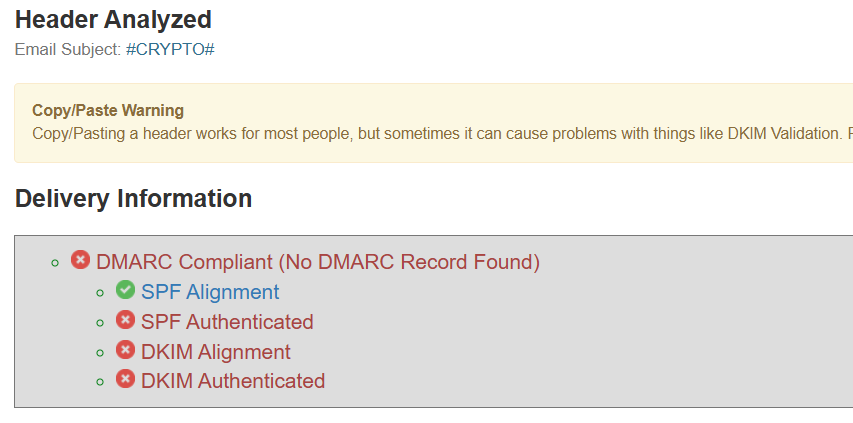 text
textAuthentication-Results: spf=none (sender IP is 192.232.233.127) smtp.mailfrom=att.net; dkim=ignore (ignored public key size) header.d=heritagejewelryandloan.com; dmarc=none action=none - Sender IP:
192.232.233.127(belongs to heritagejewelryandloan.com, not AT&T) - Contains suspicious Base64 encoded HTML content
- Multiple recipients in CC field (spray-and-pray tactic)
While checking 192.232.233.127 reputation on Abusedb it shows 0 reputation
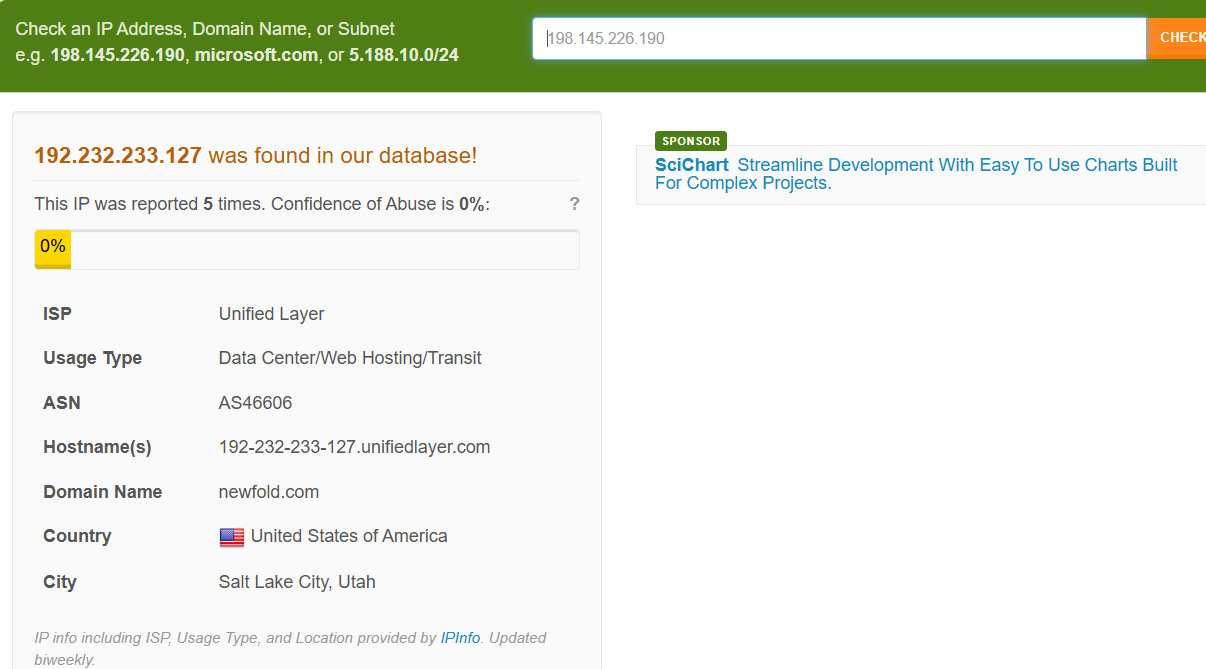 also
also urlscan did not show whether its malicious
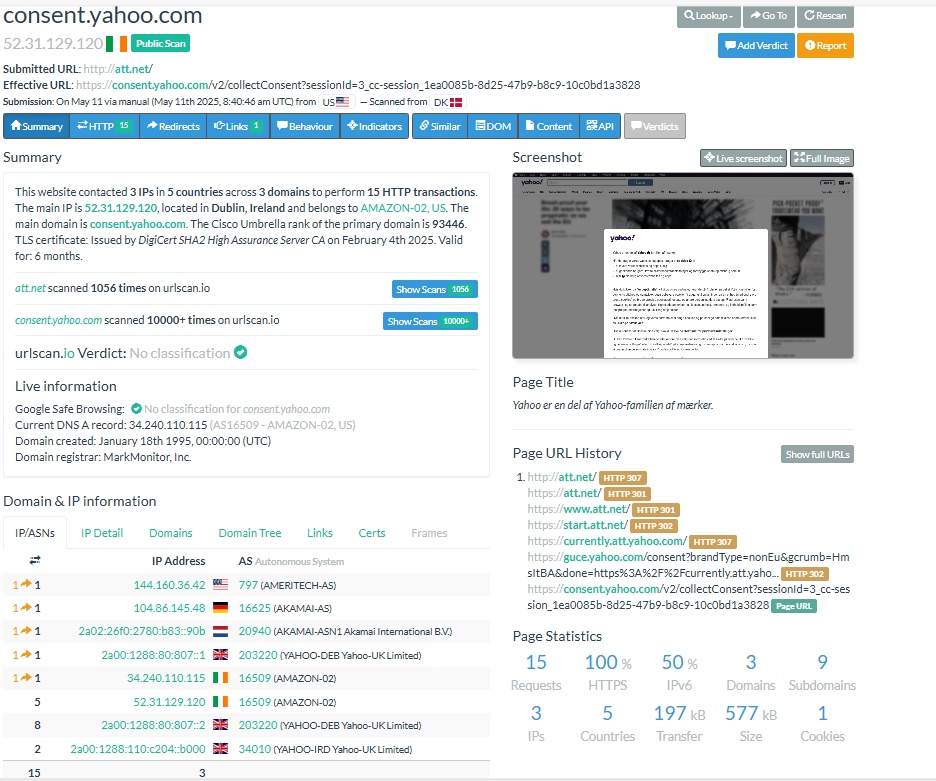
✉️ Email Header Analysis
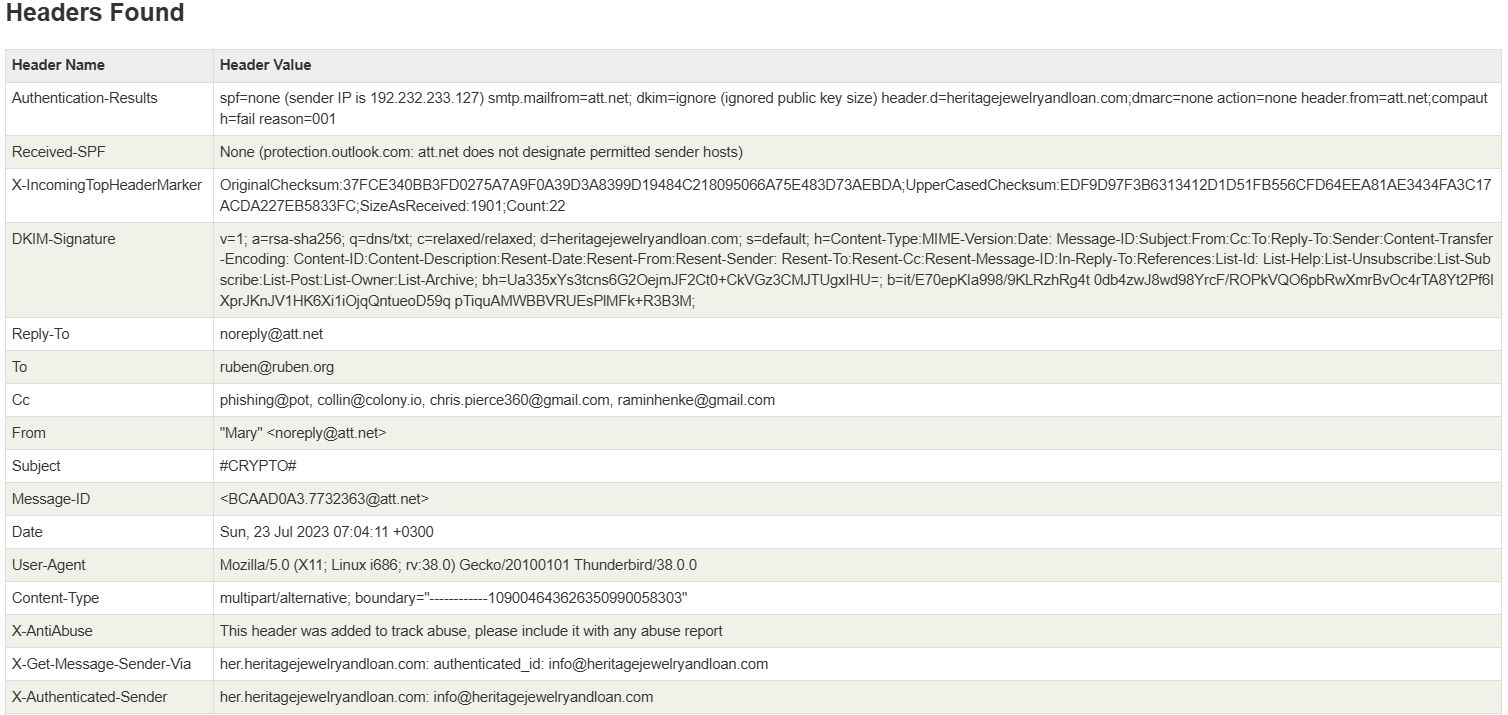
Key findings from the headers:
- From: "Mary noreply@att.net" (Display name doesn't match AT&T's typical format)
- Return-Path:
root@ubuntu-s-1vcpu-512mb-10gb-sfo3-01(Indicates sent from a cloud server) - Reply-To:
noreply@att.net(Matches From address but still suspicious) - Message-ID:
<BCAAD0A3.7732363@att.net>(Format looks legitimate but could be spoofed) - Received: Shows multiple hops through Outlook servers before reaching final destination
- X-AntiAbuse: Contains multiple headers suggesting the email was sent through heritagejewelryandloan.com
- X-Sender-IP:
192.232.233.127(Matches sending IP) - X-Mailer: Mozilla/5.0 Thunderbird/38.0.0 (Unusual for corporate email)
- CC: phishing@pot, collin@colony.io, chris.pierce360@gmail.com, raminhenke@gmail.com (which clearly indicate the phising target many victims)
📎 Attachment Analysis
- No traditional file attachments found
- Email contains Base64-encoded HTML content with suspicious image
- Decoded HTML reveals:
- Obfuscated CSS styles (unusual for legitimate emails)
- Hidden tracking image
- Suspicious "#CURL#" placeholder that would likely be replaced with malicious URL in actual attack
🔗 URL and Link Analysis
- No visible links in plain text body
- HTML contains obfuscated code that would likely generate malicious links when rendered
- Image uses data URI scheme (base64 encoded) to avoid URL detection
- Potential redirection through "#CURL#" placeholder
📝 Email Body Analysis
- Language: Very minimal content (just "#CURL#"), highly suspicious
- Impersonation: Attempts to appear as AT&T email but fails authentication
- Technique: Uses minimal content to bypass filters, relies on HTML payload
- Obfuscation: Heavy use of CSS obfuscation and base64 encoding
- Target: Sent to multiple recipients (spray-and-pray approach)
🛠 Infrastructure Analysis
- Sending Domain: heritagejewelryandloan.com
- Sending IP: 192.232.233.127 (Linode LLC)
- Tools Used:
- Exim mail server (version 4.91)
- Sent from a Linux server (Ubuntu)
- X-AntiAbuse Headers: Indicate sender was authenticated as info@heritagejewelryandloan.com
🧾 Conclusion
This email is a confirmed phishing attempt based on:
- Failed SPF, DKIM, and DMARC authentication
- Spoofed sender address (AT&T)
- Obfuscated HTML content
- Suspicious sending infrastructure
- Lack of legitimate content
- Spray-and-pray recipient targeting
✅ Classification: High Risk - Credential Phishing Attempt
🔧 Recommended Actions
-
Block Indicators:
- Sending IP: 192.232.233.127
- Domain: heritagejewelryandloan.com
- Email addresses: noreply@att.net (as used here), info@heritagejewelryandloan.com
-
User Awareness:
- Educate users about identifying spoofed emails
- Highlight the dangers of minimal-content emails with obfuscated HTML
-
Technical Controls:
- Enhance email filtering for messages with:
- Base64 encoded HTML
- Mismatched From/Return-Path headers
- Suspicious CSS obfuscation
- Implement stricter DMARC policies
- Enhance email filtering for messages with:
-
Monitoring:
- Search logs for other emails from this IP/domain
- Monitor for similar patterns in incoming mail
Note: This email appears to be a test or incomplete phishing attempt, as the malicious payload ("#CURL#") wasn't activated. However, the infrastructure and techniques used indicate malicious intent.